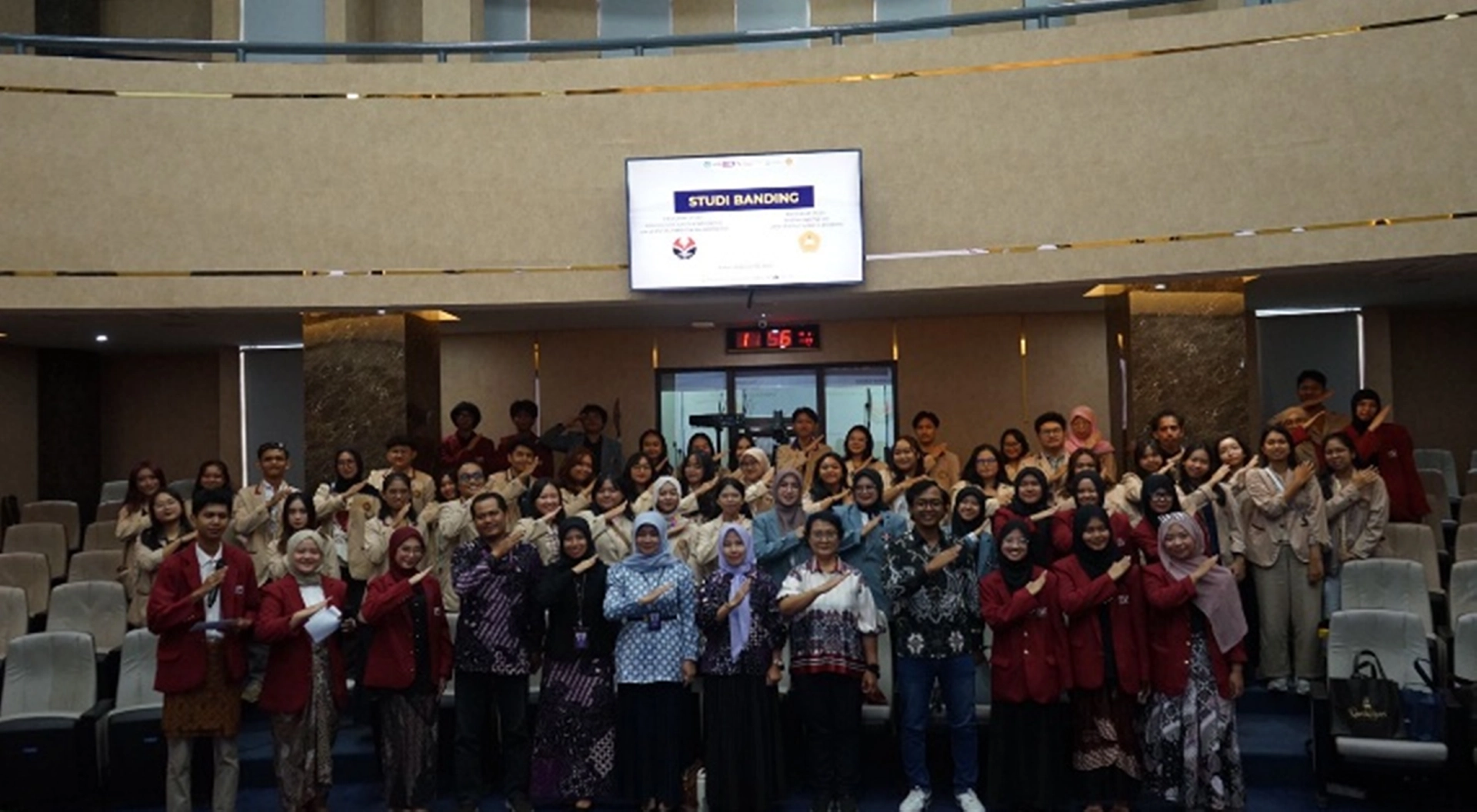
Bandung, December 18, 2025 – In an effort to strengthen academic collaboration and improve the quality of higher education, the Indonesian Literature Study Program of Universitas Sanata Dharma (USD) Yogyakarta conducted a benchmarking visit to the Indonesian Language and Literature Study Program of Universitas Pendidikan Indonesia (UPI) Bandung on Thursday, December 18, 2024. This activity became an important momentum to share best practices in study program management and to open opportunities for strategic cooperation between two leading educational institutions in Indonesia.
The event, held at the UPI Bandung campus, was warmly opened by two hosts, Nevia Aufa Ramadiani and Panji Septa Primayksa, who successfully created a friendly atmosphere from the beginning of the activity. The delegation from Yogyakarta was enthusiastically welcomed by the academic community of the Indonesian Language and Literature Study Program of UPI.
Expectations for Full and Synergistic Collaboration
The Head of the Indonesian Language and Literature Study Program of UPI, Dr. Sri Wiyanti, M.Hum., in her welcoming remarks expressed high appreciation for this benchmarking initiative. She emphasized the importance of inter-university collaboration in facing educational challenges in the modern era.
“Hopefully, in the future we can collaborate with full synergy,” said Dr. Sri Wiyanti enthusiastically. She also stated the readiness of the Indonesian Language and Literature Study Program of UPI to share experiences and learn together with Universitas Sanata Dharma.
This activity received full support from Prof. Dr. Yulianeta, M.Pd., one of the professors in the Indonesian Language and Literature Study Program of UPI. Her presence demonstrated UPI’s strong commitment to building high-quality academic networks with other educational institutions in Indonesia.
From Universitas Sanata Dharma, Susilawati Endah Peni Adji, S.S., M.Hum., as the representative lecturer attending the activity, stated that the visit met initial expectations. “We consider this meeting a very valuable benchmarking activity and an opportunity to share in many aspects,” she expressed.
In-Depth Discussion on Curriculum Policy
One of the main agendas of this benchmarking activity was a lecturer group discussion forum that discussed in depth the curriculum policies implemented at each university. This discussion session became the most anticipated agenda because it allowed both parties to learn from each other about approaches and strategies in study program curriculum development.
The discussion forum presented competent speakers from both universities. From Universitas Sanata Dharma were Mrs. Susilawati Endah Peni Adji, S.S., M.Hum. and Mr. Fransiskus Xavierius Sinungharjo, S.S., M.A., who shared their experiences in curriculum implementation at their institution.
Meanwhile, UPI was represented by Prof. Dr. Yulianeta, M.Pd. and Dr. Sri Wiyanti, M.Hum., who explained the dynamics of curriculum management within UPI.
During the discussion, various strategic topics were discussed, ranging from curriculum adjustments to industry needs and current developments, innovative learning methods, to strategies for improving graduate quality. Lecturers from both institutions shared valuable insights regarding challenges faced as well as creative solutions that have been implemented at their respective campuses.
Student Dialogue: Sharing Perspectives of the Young Generation
Not only involving lecturers, this benchmarking activity also provided space for students to engage in dialogue and exchange ideas. This student discussion session became one of the highlights of the activity because it offered direct perspectives from learners regarding their academic experiences.
Three seventh-semester students from UPI, namely Diah, Aliefia, and Efsya, shared their academic journeys, challenges faced, and achievements attained during their studies. They also described various student activities and self-development opportunities available at UPI.
From Universitas Sanata Dharma, two fifth-semester students, Ganda and Helena, were present and enthusiastically listened and shared their experiences. This dialogue created a dynamic learning atmosphere, allowing students from both campuses to understand differences and similarities in their experiences, while opening opportunities for future collaboration at the student level.
The student discussion covered various interesting topics, ranging from classroom learning methods, the use of technology in the learning process, to internship and research experiences. Students also exchanged information regarding student organizations, academic events, and soft skills development opportunities available at their respective campuses.
The half-day benchmarking activity was closed with a group photo session conducted in a very warm and familial atmosphere. The group photo taken in front of a monitor displaying the words “STUDI BANDING” became valuable documentation marking the commitment of both institutions to continue cooperation in the future.
Participants from Universitas Sanata Dharma expressed their gratitude for the warm welcome and willingness to share knowledge from the academic community of UPI. Meanwhile, UPI stated that the door to cooperation remains open and that it is ready to continue discussions to realize mutually beneficial collaborative programs.
With the conclusion of this benchmarking activity, the hope for creating strong synergy between the Indonesian Literature Study Program of USD and the Indonesian Language and Literature Study Program of UPI has become increasingly tangible. Both institutions agreed to continue communication and design cooperation programs that can enhance the quality of Indonesian literary education in the country.