Yogyakarta, August 15, 2025 - In the era of artificial intelligence, teachers are challenged to continuously adapt. Addressing this demand, the Community Service Team (PkM) of the German Language Education Study Program, Faculty of Language and Literature Education (FPBS), Universitas Pendidikan Indonesia (UPI) organized a Workshop on Deep Learning in German Language Teaching on Friday (15/8/2025) at SMAN 3 Yogyakarta.
Seventeen German language teachers from various high schools and madrasahs in Yogyakarta Province enthusiastically participated. The schools included SMAN 3 Yogyakarta, SMAN 5 Yogyakarta, SMAN 7 Yogyakarta, SMAN 11 Yogyakarta, SMA Islam Al Azhar 9 Yogyakarta, SMAN 1 Sewon, SMAN 1 Sedayu, SMAN 1 Minggir, SMAN 1 Ngaglik, SMAN 2 Wonosari, SMAN 2 Wates, SMA Kolese De Britto, SMA 1 Ngemplak, SMA Stella Duce 1 Yogyakarta, and MAN 2 Yogyakarta.
The workshop was designed to introduce the application of Deep Learning in German language teaching, making it more adaptive, effective, and relevant to today’s technological advancements.
Objectives of the Workshop
The main goals were to:
- Enhance the pedagogical competence of German language teachers in understanding the basic concepts of Deep Learning and its potential applications in classrooms.
- Develop innovative and interactive teaching methods.
- Create teaching materials tailored to the needs of the digital generation.
According to the PkM team, equipping teachers with technology is no longer a trend but a necessity.
“Teachers must be able to transform alongside technology. Through this training, we aim to equip educators with up-to-date skills to make German language teaching more engaging and of higher quality,” said Dani Hendra, S.Pd., M.A., one of the speakers.
One-Day Intensive Workshop
Unlike conventional workshops, this program was compact, focused, and interactive in a full-day session. The materials were delivered by Dani Hendra, S.Pd., M.A. and Ending Khoerudin, S.Pd., M.Hum., both experienced academics and practitioners in German language teaching and media.
The workshop was divided into two sessions:
- Introduction to Deep Learning Concepts – understanding the basic principles and its integration potential in language teaching.
- Application of Deep Learning in German Language Learning – practical implementation, including:
- Designing learning scenarios with guidance from the facilitators.
- Group discussion and reflection to ensure classroom applicability.
The teachers responded very positively:
“The materials truly opened our horizons. We now understand how to teach German more effectively and attractively,” said one participant.
Another participant added:
“This training immediately gave us concrete ideas to apply in the classroom. Practical and applicable.”
Supporting SDG 4: Quality Education
This activity is part of UPI’s commitment to support Sustainable Development Goal (SDG) 4: Quality Education. By providing teachers with advanced training, UPI contributes to enhancing digital literacy, expanding access to educational technology, and strengthening the quality of foreign language teaching in Yogyakarta schools.
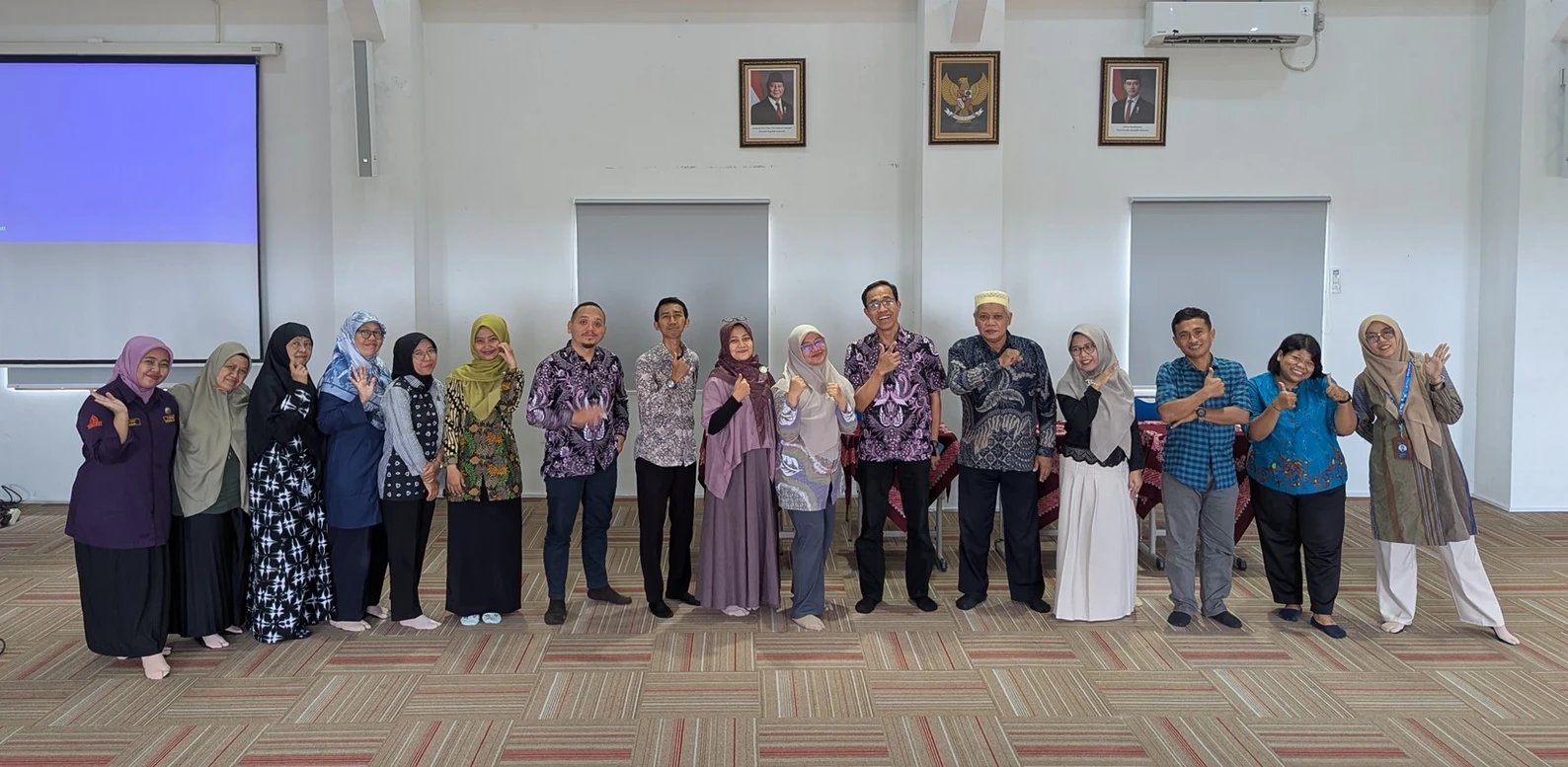
The workshop concluded with a lively Q&A session and a group photo with all participants and speakers. The PkM team hopes this will be the first step towards AI-based transformation in German language learning.
“Collaboration between universities and schools must continue to ensure teachers are not left behind by technological progress,” emphasized Ending Khoerudin, S.Pd., M.Hum.
With this spirit, the German Language Education Study Program FPBS UPI reaffirms its commitment to engaging with the community through relevant, impactful, and future-oriented community service programs.
(Contributor: Community Service Team, German Language Education Study Program FPBS UPI)