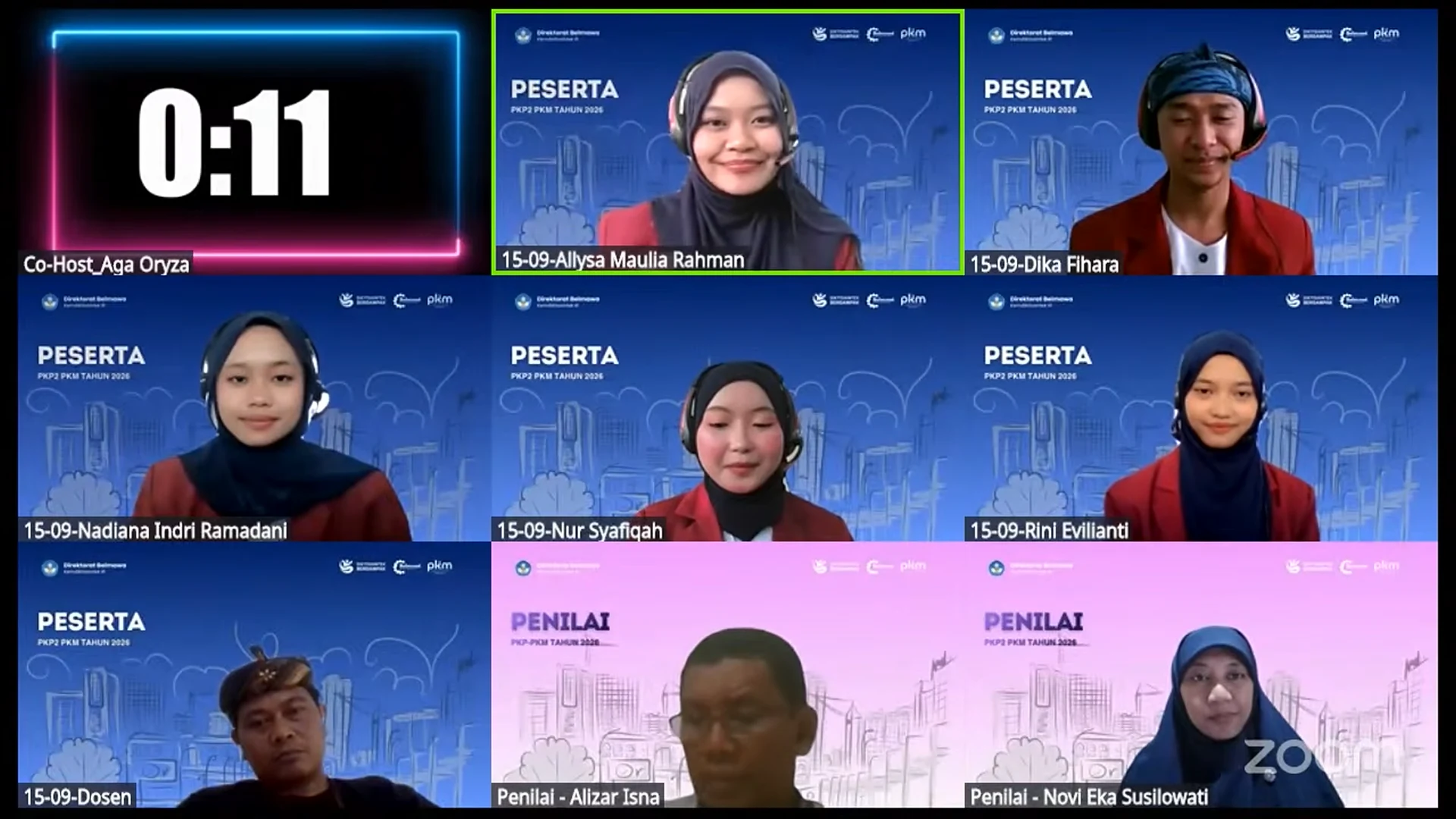
Bandung, September 16, 2026 — The Student Creativity Program in Social Humanities Research (PKM-RSH) team from the Faculty of Language and Literature Education (FPBS), Universitas Pendidikan Indonesia (UPI), has officially completed the 2026 PKM Implementation Progress Assessment (PKP2), held online by the Directorate of Learning and Student Affairs (Belmawa) of the Ministry of Education, Culture, Research, and Technology.
The research team, led by Allysa Maulia Rahman from the Indonesian Language and Literature Study Program, with members Rini Evilianti, Nur Syafiqah, Nadiana Indri Ramadani, and Dika Fihara from the Sundanese Language Education Study Program, under the supervision of Undang Sudana, S.S., M.Hum., presented the results of their study titled “Protecting the Earth through Art: The Role of Rice Ritual Songs of Kasepuhan Gelar Alam in Preserving Ecology and Food Security Based on Local Wisdom.” The team reported that the research had reached 90% completion.
Research Urgency: Recording Ecological Knowledge amid the Food Crisis
This research was motivated by the high rate of national deforestation. Data from Statistics Indonesia (BPS 2025) recorded Indonesia’s net deforestation at 175,437.7 hectares in 2024. Amid the threat of environmental degradation, the Indigenous community of Kasepuhan Gelar Alam in Sukabumi has proven capable of maintaining lasting food self-sufficiency since 1368 through the philosophy of mupusti pare, lain migusti (honoring rice, not deifying it). These moral messages and environmental ethics are transmitted orally through rice ritual songs (rumpaka/kidung).
Main Scientific Findings: Ritual Songs as Living Texts
Through computer-assisted qualitative data analysis using NVivo, which produced 14 parent nodes, 71 child nodes, and 7,462 coding references from 13 structured informants, the team formulated a three-layer conceptual model of “Songs as a Medium of Cultural Food Security”:
-
Anthropolinguistic Dimension (Duranti, 1997): This includes Active Cultural Performance through the instruments angklung buhun, dogdog lojor, rengkong, and tutunggulan; the indexicality of the lexicon “liang” (hole) in the song Adu Lilang, which connects five physical spaces from planting to eating; and Structured Participation through Rorokan, gender equality in papasangan, and oral transmission from an early age.
-
Ecosophical Mental Model (Stibbe, 2015 — Stories We Live By): Rice is personified into five humanistic phases: Baby (Ayun Ambing), Partner (Randa Ngendong), Purifying Bride and Groom (Hujan Palis), Honored Guest (Kembang Kelor), and Divine Trust (Jalan Sorompodan), which guide the ethics of mipit kudu amit, ngala kudu bebeja.
-
Speaking Authority & Sacred Silence: The Participation category recorded the highest number of coding references, with 2,224 references, while the child node “PAR_Siapa_Berhak” reached 1,732 references. The research identified three typologies of Sacred Silence in the kidung Guru Minda, Lutung Kasarung, and Bale Agung as mechanisms for protecting Indigenous knowledge.
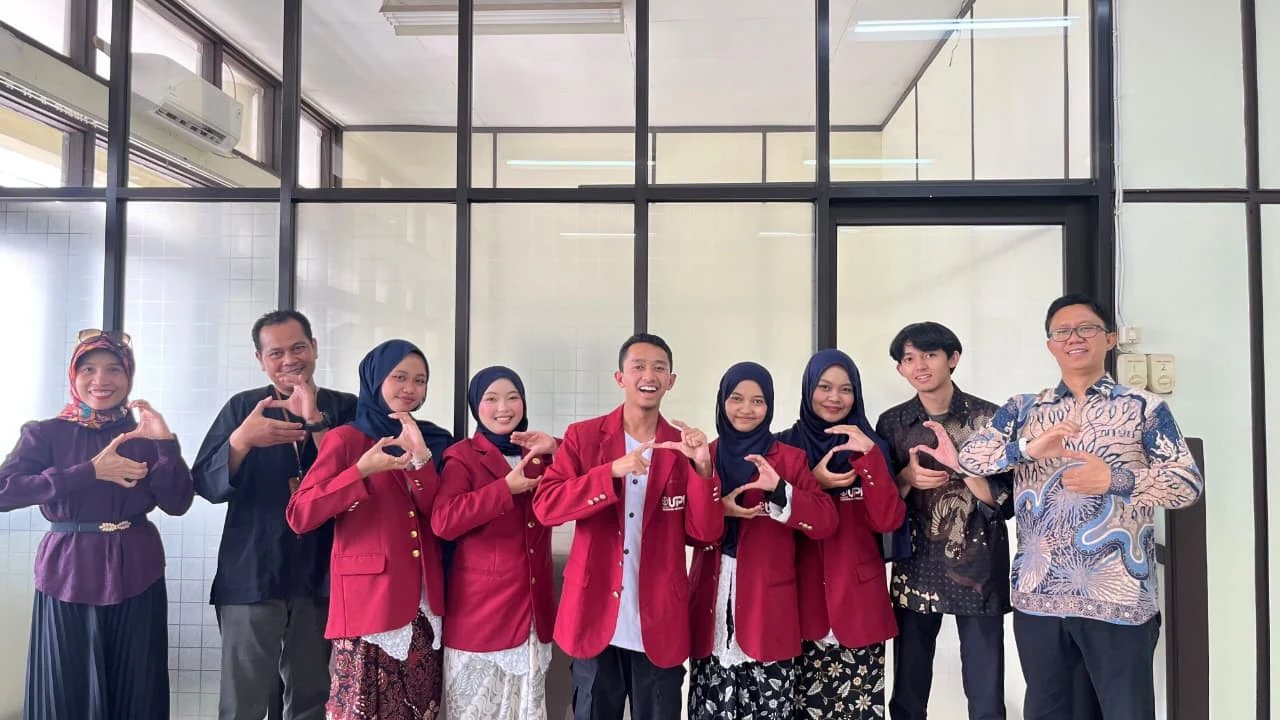
Field Impact: Four Pillars of Indigenous Food Sovereignty
The ecological messages in the ritual songs internally reinforce the community’s adherence to four physical pillars of food sovereignty:
-
Seed Sovereignty: Independent conservation of 168 local rice varieties (cere) preserved across generations without the use of external hybrid seeds.
-
Agroecology & Gumantung Lahan: A once-a-year planting pattern (six months of cultivation and six months of land rest for nutrient recovery), manual cultivation without tractors or chemical fertilizers, and the use of musical frequencies as a natural pest repellent.
-
Granary Architecture (Leuit 95 Years): Traditional rice storage in Leuit Si Jimat and family granaries, proven to preserve rice reserves for 85–95 years across generations.
-
Social Redistribution (Nyekat 10%): Allocation of 10% of the harvest as customary alms for the poor and customary institutions, protected by kapamalian prohibiting the sale of rice.
Concrete Steps & Cross-Sector Synergy
The success of the PKM-RSH Seni Jaga Bumi research was made possible by the support, guidance, and close collaboration of various parties. The team extends its highest appreciation and gratitude to:
-
Kemendikbudristek & Belmawa: For full support in funding and providing a platform for research development.
-
UPI Academic Community: Rumah Prestasi UPI, the leadership of FPBS UPI, and the UPI Research Ethics Committee.
-
Experts & Indigenous Leaders: Expert validator Prof. Dr. Retty Isnendes, M.Hum., and the customary leaders of Kasepuhan Gelar Alam for their blessing and knowledge of sustainability.
Through this synergy, the team has successfully completed a series of concrete outputs:
-
Public Policy: A draft policy brief for the National Food Agency (Bapanas) and the Agriculture Office of Sukabumi Regency.
-
Legal Protection & Publication: Intellectual property registration with the Directorate General of Intellectual Property of the Ministry of Law and Human Rights of the Republic of Indonesia, as well as a draft scientific article for a Sinta 2 journal.
-
Media Education: Active publication and documentation through Instagram @pkmrsh_senijagabumi.
May all contributions, tangible impacts, and the hard work behind this research lead to the best results. Bismillah, ready to move forward and qualify for PIMNAS! 🏆✨