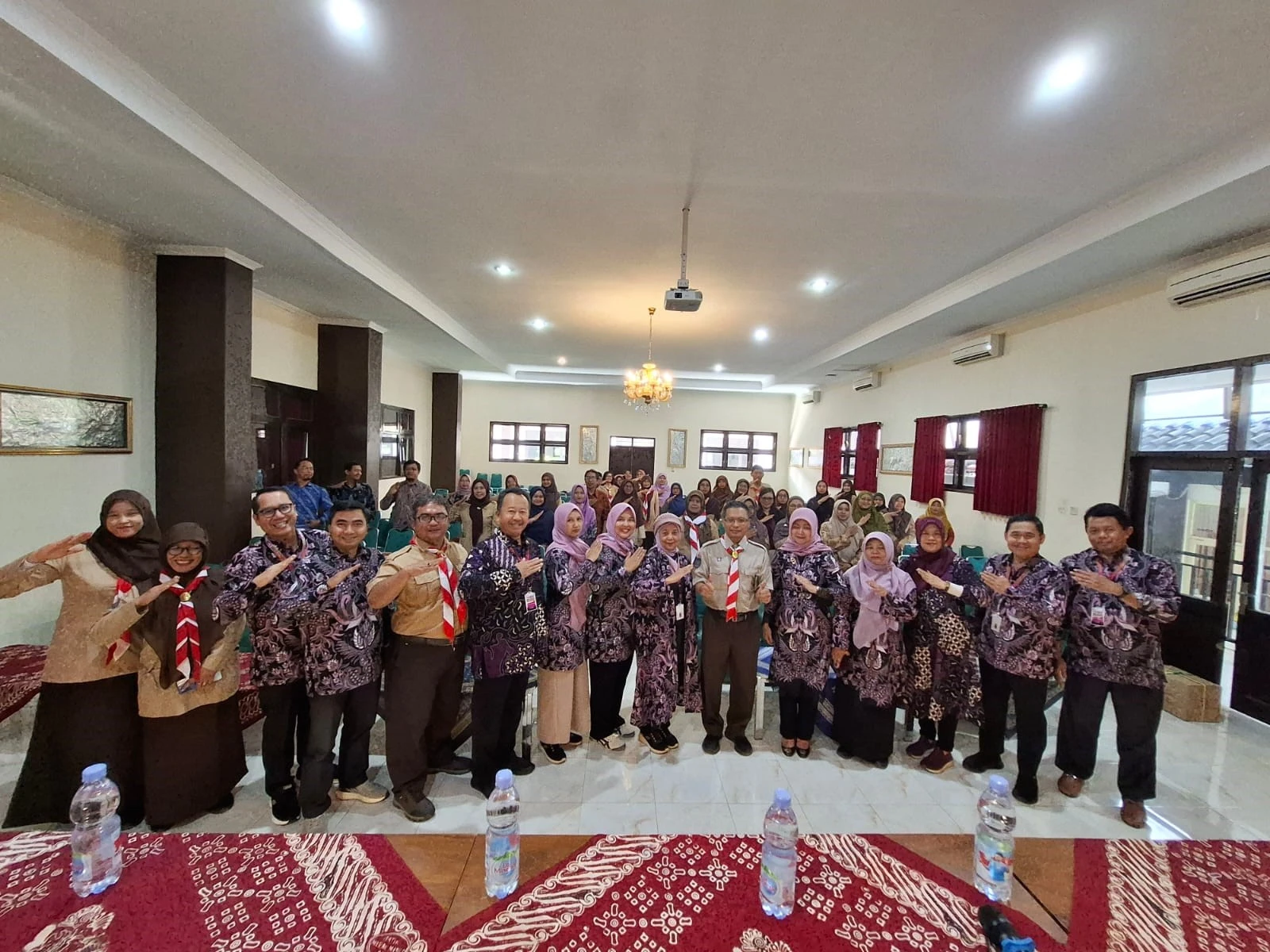
Bandung, August 14, 2025. The Indonesian Language and Literature Education Study Program, Faculty of Language and Literature Education (FPBS), Universitas Pendidikan Indonesia (UPI), in collaboration with the Indonesian Language Subject Teachers’ Working Group (MGMP) of Sleman Regency, held a series of workshops themed “21st-Century Indonesian Language Learning Innovation (Mindful, Meaningful, and Joyful Learning).” The activities were conducted in two stages: the online session on July 9–10, 2025, and the follow-up offline session on August 14, 2025, at SMPN Pakem, Jalan Kaliurang Km. 17, Sleman, Special Region of Yogyakarta.
Head of the PBSI Study Program FPBS UPI, Prof. Dr. Sumiyadi, M. Hum., stated that this program aims to strengthen the competence of Indonesian language teachers so that they can implement learning relevant to the demands of the 21st century, learner-centered, and emphasizing meaningfulness, awareness, and joy in the learning process. “We want to provide a space to share best practices that not only enhance teaching skills but also build an inclusive and sustainable learning ecosystem,” he said.
Meanwhile, the organizing committee representative, Ahmad Fuadin, M.Pd., explained that this program is part of UPI’s commitment to implementing the Tri Dharma of Higher Education, particularly community service that has a real impact on the quality of education.
This activity is aligned with several Sustainable Development Goals (SDGs), particularly Goal 4: Quality Education, which emphasizes the importance of ensuring inclusive and equitable quality education and promoting lifelong learning opportunities for all. In addition, the implementation of this workshop also supports Goal 17: Partnerships for the Goals, through collaboration between universities, teacher forums, and schools to produce learning innovations that can be applied in classrooms.
During the online session, participants received materials on project-based learning approaches, technology integration in language learning, and strategies to build positive classroom interactions. Meanwhile, the offline session at SMPN Pakem focused on teaching practice mentoring, sharing learning modules, and reflective discussions among participants.
Chairman of the MGMP Indonesian Language of Sleman Regency, Luhur Budi Wibowo, S.S., appreciated this collaboration. “Through this training, teachers gain new insights as well as the opportunity to practice directly. This is an important capital for improving the quality of learning in schools,” he said.
This activity is expected to empower Indonesian language teachers in Sleman to become agents of change who make learning more contextual, creative, and enjoyable, while contributing to the achievement of the sustainable development agenda in education.
(Ahmad Fuadin)