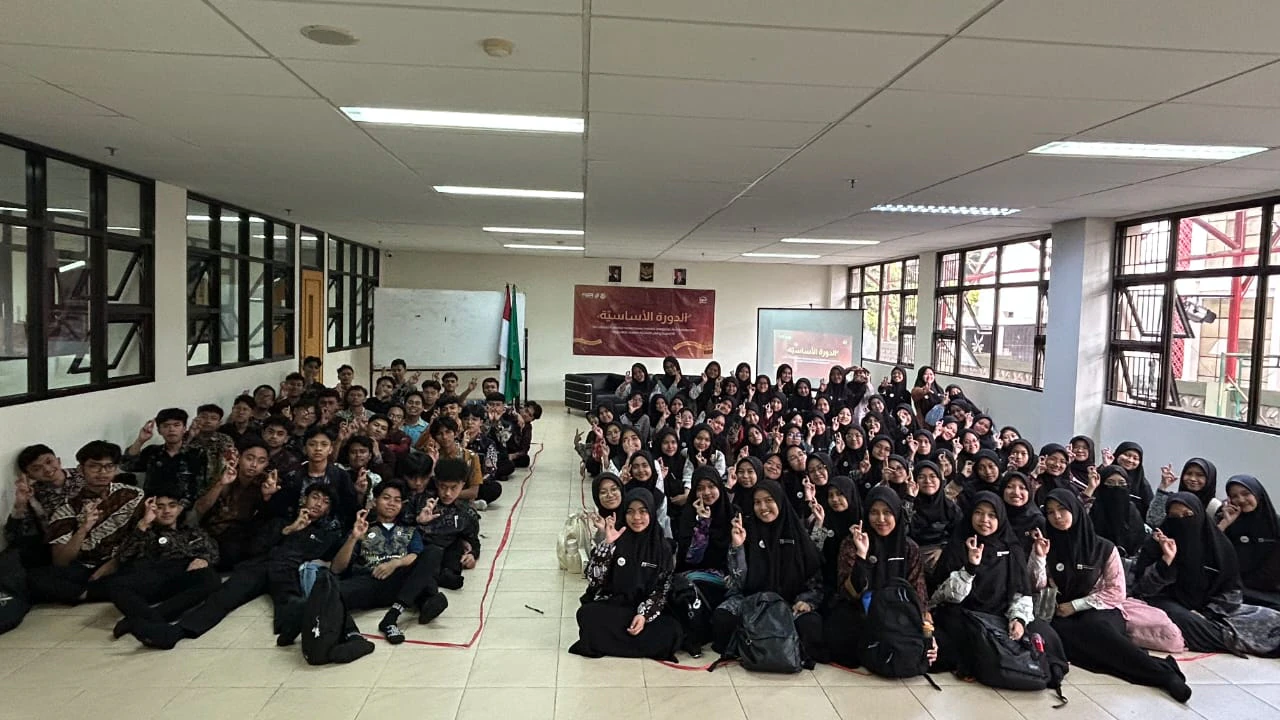
Bandung, September 26, 2026 — The Student Executive Board of the Arabic Language Student Association (BEM KEMABA), Faculty of Language and Literature Education (FPBS), Universitas Pendidikan Indonesia, once again held the 2026 Daurah Asāsiyyah al-Ūla cadre development program. The event carried the theme “Actualizing Student Character through Adaptation and Collaboration to Build a Supportive KEMABA Community.” The program served as an initial step in strengthening the ideological and character development of new students from the 2026 cohort.
The first stage of the Arabic Language Education student association’s cadre development program, Daurah Asāsiyyah al-Ūla, was held on Saturday, September 26, 2026, at the KEMA FPBS Secretariat, Building A, FPBS UPI. It marked the beginning of a program designed to reinforce the life principles of new students by establishing Islamic values as a foundation for their academic and social lives. The program also sought to strengthen their spirit of dedication and concern for others while encouraging them to realize their potential through adaptive and collaborative attitudes in responding to contemporary developments, thereby building a supportive and mutually empowering KEMABA community.
Daurah Asāsiyyah al-Ūla featured four main sessions covering ideological, philosophical, organizational, and student development aspects. The four sessions equipped students to develop adaptive, collaborative, and supportive attitudes in academic and organizational settings.
The first session, “Islamic Ideology and Philosophy: Islamic Ideology as the Foundation of Students’ Spirituality and Critical Intellectual Character,” was delivered by Arabic Language Education alumnus Fikri Zulfan Fauzi, S.Pd. He emphasized the importance of a strong ideological and philosophical foundation to guide Muslim students in their academic and social lives. This foundation is expected to help students think critically, broaden their perspectives, and respond wisely to contemporary developments while remaining grounded in Islamic values.
The program continued with the second session, “The Importance and Philosophy of KEMABA’s Struggle,” delivered by Arabic Language Education alumni Gema Mutakabbir, S.Pd., and Mushtofa Shadiq Al-Rafi’i, S.Pd. They explained that KEMABA is more than a place for students to gather; it is founded on the values of solidarity, dedication, and contribution. New students were also encouraged to adapt to campus life by balancing academic and organizational responsibilities while embracing simplicity and collaboration. A sense of belonging and concern for fellow students was highlighted as essential to building a supportive and mutually empowering KEMABA community.
Before the third session, Dr. Rinaldi Supriadi, M.Pd., Secretary and lecturer of the Arabic Language Education Program, delivered remarks expressing appreciation and encouragement to the new students for participating in Daurah Asāsiyyah al-Ūla. The third session, “The Importance of Adaptability and Problem-Solving Skills in the Dynamics of Organizational Life,” was delivered by Arabic Language Education alumnus Faiz Nasyith Hakim, S.Pd. He discussed the importance of planning and managing activities, communicating, collaborating, adapting, and taking responsibility within an organization. He also introduced the stages of organizing an activity, from planning and preparation to implementation, problem-solving, and evaluation.
The fourth session, “Violence Education: Recognize, Prevent, and Report,” was delivered by Nadia Cyntia Dewi from UPI’s Violence Issue Prevention and Response Unit (SPPIK). The session introduced new students to the definitions, forms, elements, and methods of sexual violence. Students were invited to understand sexual violence through seeing, hearing, and feeling, and to recognize physical, nonphysical, and digital forms of sexual violence. The session also addressed the importance of consent that is voluntary, informed, conscious, specific, and revocable. The speaker explained various methods of sexual violence, including grooming, threats, abuse of authority, and extortion, and invited students to analyze several case studies through a myth-or-fact session. The material also covered violence prevention at the individual and community levels, the types of conduct that can be reported through SPPIK UPI, data and trends concerning sexual violence cases at UPI, and the reporting procedures available when violence occurs on campus.
Together, the four sessions provided complementary guidance for new students, ranging from strengthening their ideological foundation and understanding KEMABA’s values and commitment to developing adaptability in organizational life and awareness of the importance of creating a safe and supportive environment. Through Daurah Asāsiyyah al-Ūla, BEM KEMABA FPBS UPI hopes that the program will serve as an initial step for new students to develop into individuals who are principled, adaptive, collaborative, caring, and responsible toward others. Beyond being a cadre development program, the activity is expected to foster a sense of belonging to KEMABA and mark the beginning of supportive and mutually empowering bonds among Arabic Language Education students.