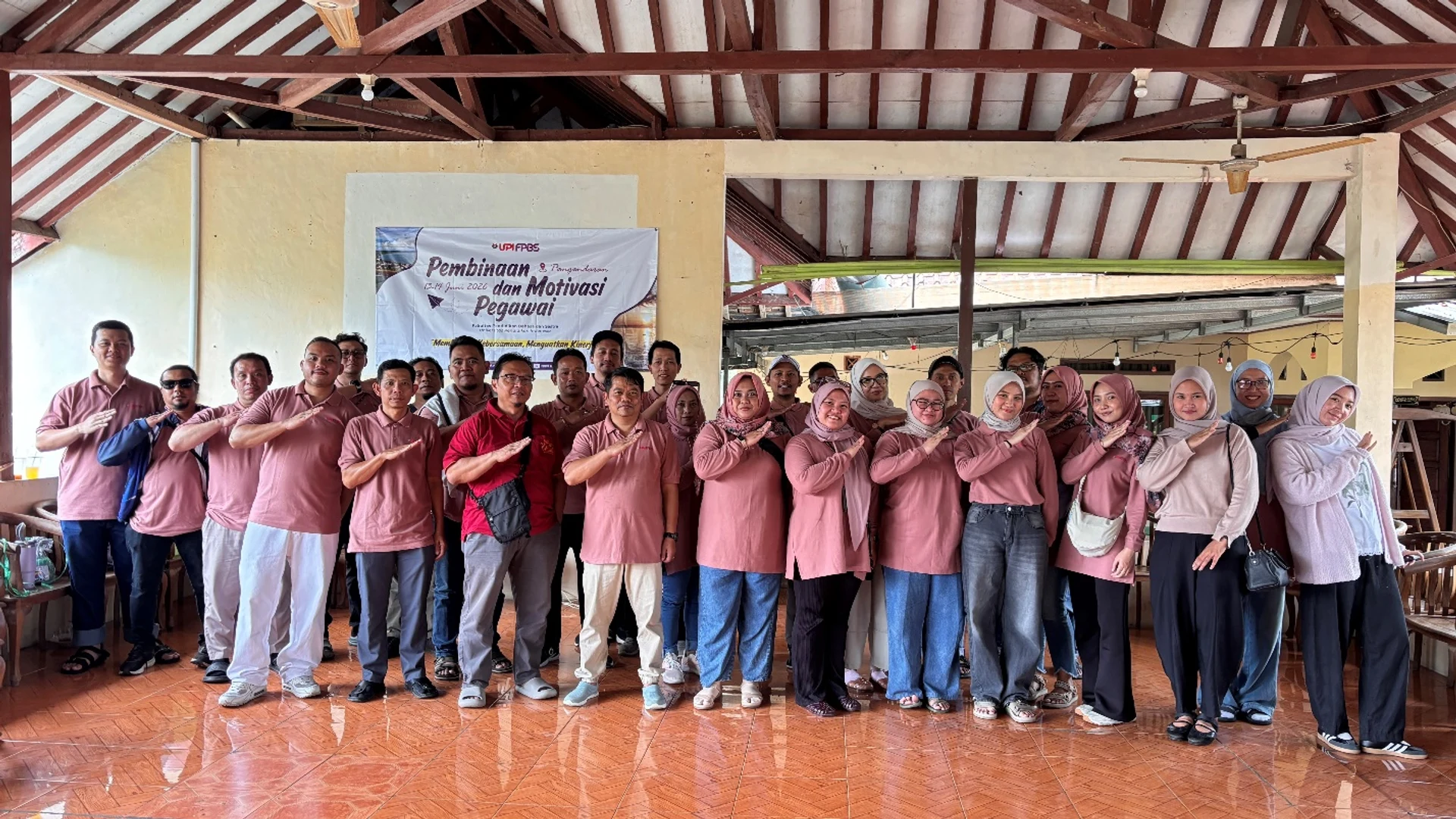
The Faculty of Language and Literature Education (FPBS), Universitas Pendidikan Indonesia (UPI), organized a Coaching and Motivation Program for Educational Staff on Saturday-Sunday, 13-14 June 2026, in Pangandaran. The activity was led by the Vice Dean for Resources and General Affairs, Prof. Dr. Mohamad Zaka Al Farisi., M.Hum., accompanied by the Head of the General Administration and Resources Section, Rohman, S.A.P., and attended by educational staff across FPBS.
The series of activities began with the participants’ departure to the venue and continued with a briefing and coaching session delivered by the Vice Dean for Resources and General Affairs. In his remarks, he encouraged all educational staff to continue improving professionalism, strengthening collaboration, and maintaining a spirit of togetherness in supporting academic and administrative services within FPBS.
The participants then took part in various games (team building) designed to strengthen communication, build teamwork, and increase solidarity among educational staff. Through these activities, participants were encouraged to foster mutual trust and a collaborative spirit in a relaxed and enjoyable atmosphere.
After the main activities were completed, participants used the available time to interact and enjoy togetherness in a more informal setting. This moment served as a way to strengthen relationships among employees while refreshing their spirit before returning to their duties and responsibilities in the workplace.
This coaching and motivation program reflects FPBS UPI’s commitment to building a positive work culture and supporting human resource development. In line with the Sustainable Development Goals (SDGs), this activity contributes to SDG 8 (Decent Work and Economic Growth) through the strengthening of human resource quality and to SDG 16 (Peace, Justice, and Strong Institutions) by fostering a harmonious, collaborative, and productive work environment.
(Teja Mustika)