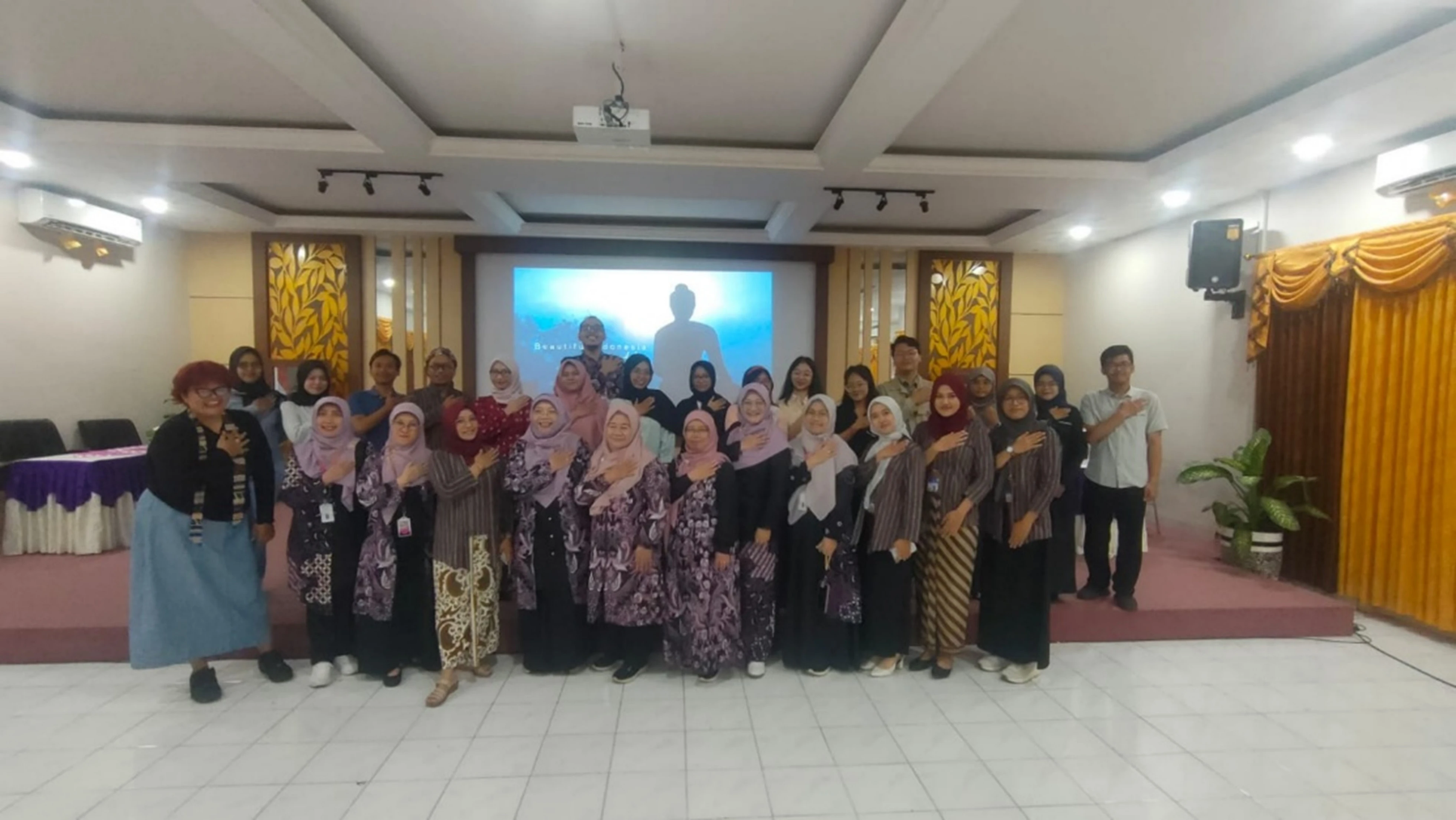
The Indonesian Language and Literature Education Study Program reaffirmed its commitment to supporting the development of Indonesian as a global language. From August 1–14, 2025, the program held a Community Service activity entitled “Workshop on Developing Technology-Based Indonesian for Foreign Speakers (BIPA) Teaching Materials.” The event was conducted in a hybrid format (online and offline) as a collaboration between Universitas Pendidikan Indonesia (UPI) and Universitas Negeri Yogyakarta (UNY). The synergy of these two leading universities resulted in a training program relevant to the times, particularly in addressing the challenges of teaching BIPA in the digital era.
According to the head organizer, the workshop aimed to:
- Enhance BIPA educators’ competence in developing technology-based teaching materials.
- Encourage creativity and innovation in teaching Indonesian to foreign learners.
- Expand academic networks between UPI, UNY, and BIPA institutions in Indonesia.
“Participants not only received materials but also practiced developing teaching resources ready for implementation. As a result, the outcomes were more practical and beneficial for BIPA learning,” said one of the speakers from UNY.
The workshop was divided into two phases. The online session (August 1–10, 2025) included public lectures, panel discussions, and guided practice in developing technology-based teaching materials, supported by lecturers and BIPA practitioners. The content covered the use of digital media, interactive applications, and innovative teaching strategies for foreign learners.
Indonesian has been increasingly recognized on the international stage. As an official ASEAN language with a growing number of speakers, the demand for BIPA learning continues to rise. To meet this demand, the development of beginner-level BIPA teaching materials is essential. Beginner-level BIPA serves as the entry point for foreign learners to understand both the Indonesian language and culture. The materials are designed to enable learners to communicate in simple everyday situations such as introducing themselves, shopping, asking for directions, or expressing feelings. The ultimate goal is not only to build language skills but also to introduce cultural contexts so that learners understand how language is used in Indonesian society.
Key Characteristics of Beginner-Level BIPA Teaching Materials:
- Simple and Communicative – uses high-frequency vocabulary, short sentences, and basic structures.
- Contextual and Visual – supported with illustrations or digital media to aid comprehension.
- Integrative – combines listening, speaking, reading, and writing skills in one unit.
- Culturally Based – introduces polite expressions, greetings, and local customs.
- Gradual – progresses from words → phrases → sentences → simple texts.
In practice, teaching beginner-level BIPA faces challenges, such as learners’ diverse language backgrounds, varying motivations, and limited teaching resources. Thus, innovation in teaching materials is required - particularly the use of digital technology (applications, e-learning, interactive media), integration of local cultural content, and multimodal resources combining text, images, audio, and video.
In addition, the offline session (August 14, 2025) was held at UNY, where participants engaged in intensive practice, direct workshops, and presentations of their digital teaching material prototypes.
By the end of the workshop, participants successfully produced various innovative technology-based BIPA teaching material designs. These outputs are expected to be implemented in international classes, enabling foreign learners to more easily grasp Indonesian through digital approaches.
This workshop also marked a concrete step in supporting the government’s Indonesian internationalization program. Indonesian is positioned not only as a means of communication but also as a cultural identity that can be introduced to the world through digital media.
The workshop emphasized the strategic role of the Indonesian Language and Literature Education Study Program, UPI, and UNY in improving the quality of language education. With the support of technology, BIPA teaching is expected to become more adaptive, creative, and responsive to the challenges of globalization.
(Isah Cahyani)