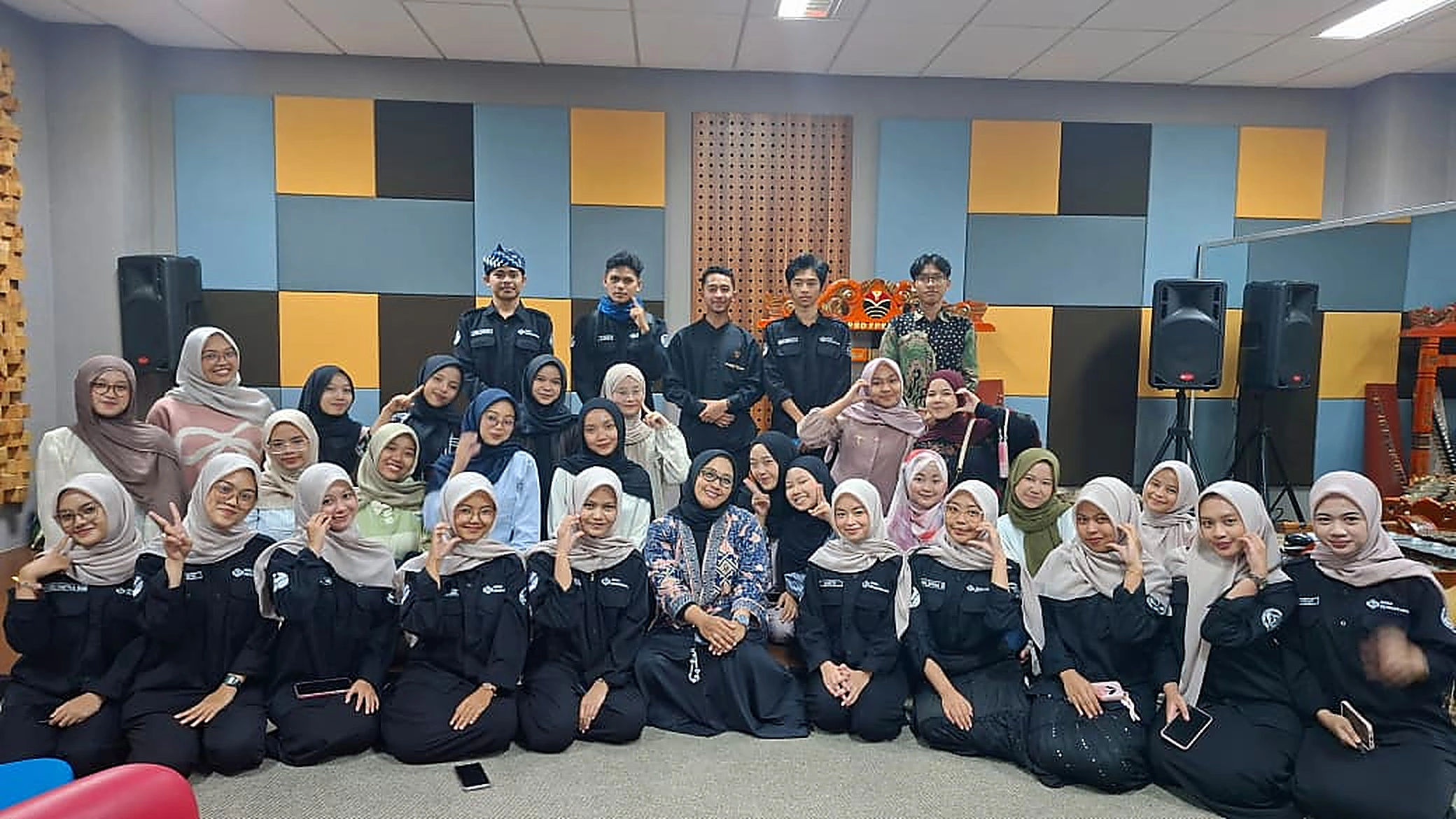
BANDUNG, WPs. - Hima Pensatrada’s Kawanojaan Division successfully organized an MC Skills Training on Friday, 24 April 2026 in the Cultural Room on the second floor of the FPBS UPI Building. This interactive academic activity was attended by 20 participants who had passed the Kaparigelan MC selection, with a main speaker who is an expert in the field. The event aimed to improve students’ formal and informal communication competence in facing public challenges. The training series proceeded smoothly and enthusiastically through discussions on practical public speaking techniques and professional vocal management to shape capable and distinctive event hosts.
Mrs. Shinta Anggraeni, M.Pd., as the main speaker, explained that public speaking is an important skill that students, as agents of change, need to keep practicing consistently. She emphasized the importance of vocal control, intonation, and self-confidence when appearing in public so that messages can be conveyed effectively. “The ability to speak in public does not come instantly, but requires a consistent training process,” she said emphatically. She also stressed that students need to dare to try and make use of every opportunity to perform in order to overcome hesitation and expand their own leadership capacity.
Agaisyta, as Head of the Kawanojaan Division, expressed her hope for the sustainability of this program as a long-term investment for the future of both the organization and the individual. “My hope is that this work program can become a spark of enthusiasm as well as a gateway for students to dare to step out of their comfort zone,” she said in a forward-looking tone. She added that the activity is expected to produce students who are ready to serve as MCs in various contexts, both within the university environment and on a wider professional scale.
This comprehensive training discussed strategies for building self-confidence in front of an audience in order to overcome stage fright. The material included vocal intonation management, techniques for opening and closing an event in ways that capture audience attention, and improvisation skills in certain situations that require quick decisions. In addition to receiving theoretical material, participants were also given direct practice opportunities (roleplay) to develop their skills in becoming communicative, adaptive, resilient, and professional MCs.
This activity is closely related to the implementation of SDG 4 (Quality Education), in which enrichment does not rely solely on cognitive aspects. Students were encouraged to develop non-academic skills, particularly in communication, so that they can compete in the global era while building a learning environment that is adaptive to the dynamics of the times.
The lesson of this activity reaffirmed the importance of courage, perseverance, and consistency in developing hidden personal potential. As expressed by one participant who directly felt the impact of this intensive session, Sherina Orin said, “After joining this training, I became more confident to speak in public and more motivated to keep practicing so that I can become a professional MC.” In the end, the training successfully connected academic needs with the practical skills that are absolutely required by today’s younger generation.
Contributors: Indah Shafira, Dian Hendrayana